Linear Motion Ball Bearing Slide Units: A Design Engineer’s Guide to Selection, Installation, and Maintenance
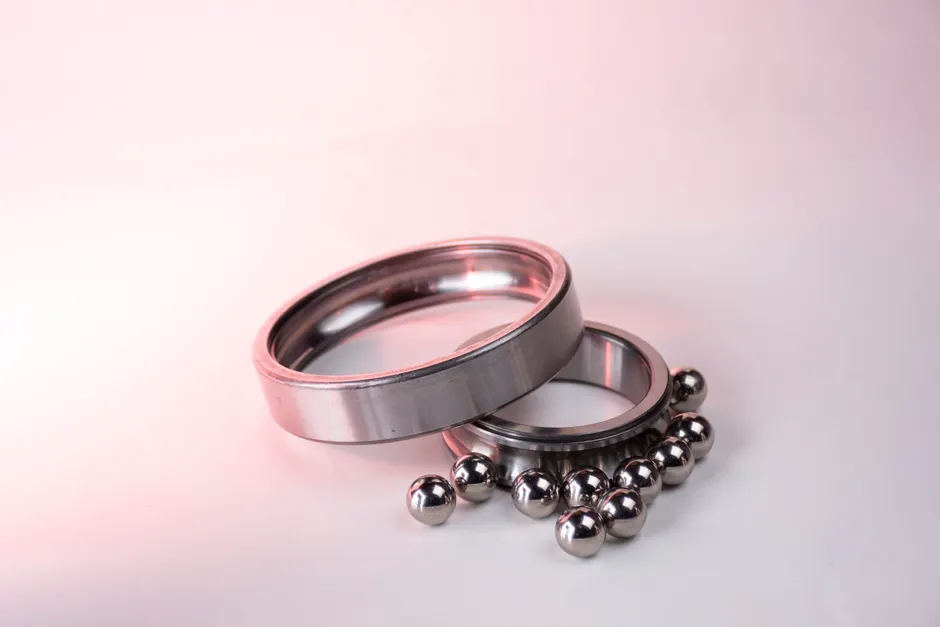
Precision linear motion is the backbone of modern automated manufacturing. Whether you are specifying components for a new CNC rail slide bearings assembly or retrofitting an existing automation guide bearing blocks arrangement, the choice of sliding element directly affects repeatability, load capacity, and total cost of ownership. Among the most versatile and widely adopted solutions are Linear Motion Ball Bearing Slide Units: self-contained assemblies that combine a recirculating ball bushing with a rigid aluminum or steel housing, ready to mount on a precision shaft or rail.
This article explains what linear slide bearing units are, why they outperform plain-bearing alternatives in many industrial settings, and how to specify the correct size and seal configuration for your application. We also look at two related product families within our portfolio—the AK and AKL ranges—and outline practical bearing slide unit maintenance routines that extend service life in demanding environments.
For engineers and procurement managers evaluating industrial linear motion components, this guide should serve as a practical starting point. You can explore the full range of Linear Motion Ball Bearing Slide Units on our product category page.
What Are Linear Motion Ball Bearing Slide Units?
Linear Motion Ball Bearing Slide Units are ready-to-mount linear bearings that house a recirculating ball bushing inside a machined housing block. The housing typically includes mounting holes, a precision bore for the ball bushing, and sometimes a lubrication port or seal groove. Because the bearing is pre-installed and aligned at the factory, the end user receives a drop-in component rather than a collection of loose parts.
These units differ from simple ball bushing slide blocks in that the housing provides structural support, load distribution, and compatibility with standard bolt patterns. Common designations such as SCS slide units refer to compact, closed-type housings that enclose the bearing on all sides, while open variants allow the unit to be mounted on a supported shaft from above. Both forms are widely used in packaging machinery, 3D printers, measurement stages, and material handling systems. The closed configuration protects the rolling elements from contamination, while the open configuration is ideal when the shaft is already constrained by support rails and space is limited.
Key Design Benefits for Industrial Automation
Why specify ball-based linear slide bearing units instead of plain bushings or profile-rail carriages? The answer depends on duty cycle, environmental exposure, and budget. For many OEMs, the advantages include:
- Low friction and high efficiency: Recirculating balls reduce breakaway force and running friction, which improves motor sizing, lowers heat generation, and reduces energy consumption over the machine life.
- Compact, self-aligning packages: The housing absorbs minor misalignment between parallel shafts, simplifying frame assembly and reducing the need for ultra-precise welded structures.
- Cost-effective modularity: Standard SCS slide units and similar footprints interchange across many suppliers, reducing spare-part risk and simplifying multi-source procurement.
- Easy integration: Pre-drilled mounting holes let designers attach the block directly to tooling plates, carriages, actuator arms, or sensor brackets without additional machining.
- Sealing options: Dust covers, rubber seals, and stainless-steel variants protect the raceways in contaminated environments such as woodworking, food handling, or outdoor automation.
Because these benefits address speed, precision, and reliability simultaneously, industrial linear motion components of this type are often the first choice for medium-duty automation where profile rails would be overkill and plain bearings would fall short.
Common Applications: CNC, Automation, and Robotics
In CNC machinery, CNC rail slide bearings of the ball-bushing type provide smooth tool-head or worktable movement along hardened shafts. They tolerate the intermittent loads and rapid reversals typical of milling, drilling, and laser-cutting operations while maintaining positional accuracy. Compared with full-profile linear guides, they occupy less space and can be more economical for light-to-medium cutting forces where absolute rigidity is not the primary constraint.
Automation guide bearing blocks also appear in pick-and-place systems, pallet conveyors, and gantry robots. Here, the priority is often repeatability over absolute stiffness. A well-chosen linear slide bearing unit delivers the required repeatability without the weight and cost of a heavy profile-rail system. In collaborative robotics, compact ball bushing slide blocks allow designers to keep joint assemblies light while preserving smooth, predictable motion.
Other common applications include medical diagnostic equipment, textile machines, woodworking routers, and semiconductor wafer handling. In each case, the ability to run on a simple round shaft lowers the overall system complexity and makes field maintenance more straightforward. The same bearing technology can be scaled from compact benchtop equipment to larger material handling gantries simply by selecting the appropriate housing size and shaft diameter.
Subcategory Spotlight: AK and AKL Product Lines
Our catalog organizes related designs into application-specific product families. Two families that share the same basic rolling technology are the AK and AKL product lines.
The AK product line consists of standard closed and open housed linear bearings optimized for general automation and auxiliary motion axes. These units offer a balanced combination of load capacity, rigidity, and price, making them suitable for builders of custom machinery who need dependable components without over-specifying. They are typically used in horizontal transfer axes, indexing tables, and light positioning stages where the applied load is centered and the duty cycle is moderate.
The AKL product line adds a longer housing and additional ball circuits, which increases the contact length between the bearing and the shaft. The result is higher moment load capacity and better stiffness for cantilevered or off-center loads. Engineers who are designing vertical axes, extending gantries, or any arrangement where the applied force acts at a distance from the bearing center should evaluate the AKL range. The extra bearing length distributes load more evenly and reduces deflection under bending moments.
Both product lines are manufactured to tight dimensional tolerances and can be matched with standard precision shafts, support rails, and shaft brackets. You can view the AK slide units and AKL slide units on their respective category pages.
Installation Best Practices for Bearing Slide Units
Even a high-quality bearing can underperform if it is misaligned, overloaded, or poorly lubricated. During installation, observe the following guidelines:
- Shaft alignment: Parallelism between shafts is critical. Use a dial indicator or laser alignment tool to ensure that the mounting surfaces and shaft supports are within the manufacturer’s tolerance. Misalignment increases sliding resistance and accelerates raceway wear.
- Bolt torque: Apply uniform torque in a cross-pattern, similar to tightening a cylinder head. Uneven clamping can distort the housing and preload the bearing unintentionally.
- Lubrication: Use the lubricant recommended for the environment. Light machine oil is common for clean environments; lithium-based grease with appropriate additives is preferred for dusty or wash-down areas.
- Shaft quality: Pair the bearing with a shaft of the correct hardness, surface finish, and diameter tolerance. A soft or scored shaft will destroy the bearing regardless of its quality.
- Load direction: Respect the rated load direction. Open-type units generally carry load away from the opening, and moment loads should be verified against the published specifications.
Taking time during the assembly phase will prevent the noise, stick-slip, and premature failure that can otherwise compromise production schedules. It is also wise to run the axis through a full travel cycle at low speed before applying full production loads, allowing any misalignment to reveal itself early.
Bearing Slide Unit Maintenance and Troubleshooting
A structured bearing slide unit maintenance program is the best way to maximize return on investment. Routine tasks should include cleaning the shaft surface, inspecting seals for cuts or deformation, and re-lubricating at intervals based on operating hours and contamination exposure.
Watch for these warning signs:
- Increased running noise or vibration: often indicates lubrication breakdown, raceway contamination, or the beginning of ball-element fatigue.
- Higher drive current or motor temperature: can signal rising friction from wear, misalignment, or inadequate lubrication.
- Visible scoring on the shaft: usually means abrasive particles have entered the bearing and the unit should be replaced before further shaft damage occurs.
- Loose mounting bolts or housing cracks: indicate overload, fatigue, or shock loading and require immediate inspection.
In clean environments, preventive re-lubrication may only be needed every few thousand hours. In dirty or wet environments, inspect and service the units far more frequently. Keep a log of operating hours and replacement cycles so that spare parts can be ordered before failures occur. When replacement is necessary, replace the bearing and inspect the shaft together; a damaged shaft will quickly damage a new bearing.
Linear Motion Ball Bearing Slide Units offer a proven balance of precision, modularity, and value for design engineers and procurement teams. From compact SCS slide units in light automation to reinforced AKL slide units in heavy-duty gantries, the right choice depends on load, speed, environment, and alignment discipline.
By understanding the differences between standard and extended designs, following proper installation procedures, and committing to regular bearing slide unit maintenance, you can build motion systems that remain accurate and productive for years. To review specifications, compare dimensions, and request samples, visit our Linear Motion Ball Bearing Slide Units category page.
Recent News
- Guide Shaft Support: Selection, Mounting, and Maintenance for Precision Linear Motion Systems
- Linear Bearing Selection, Lubrication and Maintenance: An Engineer’s Guide
- Linear Bearing Short and Medium: Selection, Installation, and Maintenance for Compact Motion Systems
- Shaft Support: A Complete Engineering Guide for Linear Motion Systems
- Linear Bearing Selection, Load Rating, and Maintenance for Reliable Industrial Motion
- Linear Box Unit Selection, Mounting, and Maintenance: An Engineer’s Guide
- Stainless Steel Linear Bearing: Selection, Applications, and Maintenance Guide
- Linear Bearing with Steel Cage: Selection, Performance, and Maintenance Guide