Pressing Bush Bearing: Selection, Types, and Maintenance for Precision Linear Motion
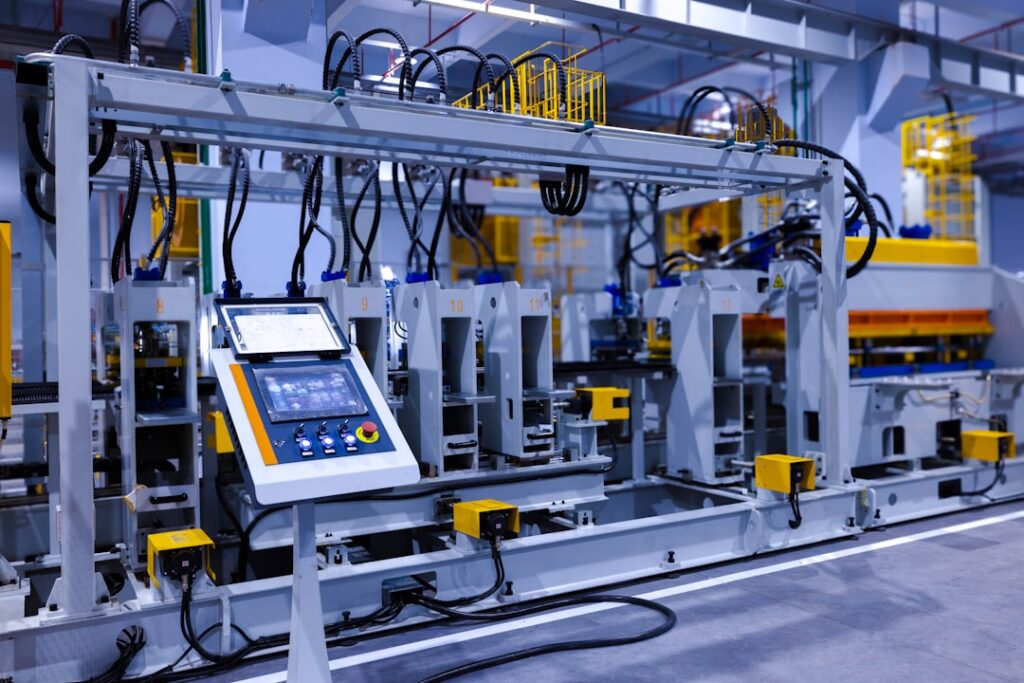
Linear motion systems are the backbone of modern automated machinery, and at the heart of many of these systems sits an often-underappreciated component: the pressing bush bearing. Designed to support smooth, repeatable sliding motion along a shaft or guide rod, these press-fit bushings deliver precise guidance with minimal play, compact installation dimensions, and reliable performance across millions of cycles.
For design engineers and procurement managers, choosing the right bushing is rarely as simple as matching a bore diameter. Load direction, shaft tolerance, contamination exposure, lubrication access, and mounting method all influence which configuration will perform best over the equipment’s service life. This guide walks through the essential considerations for pressing bush bearing selection, compares the most common industrial bush bearing types, and outlines proven linear motion bearing maintenance practices to extend service intervals and reduce unplanned downtime.
Whether you are specifying components for a new pick-and-place gantry, retrofitting a packaging line, or sourcing replacements for legacy equipment, the following sections provide a practical engineering bearing application framework for evaluating options.
What Is a Pressing Bush Bearing and How Does It Work?
A pressing bush bearing is a cylindrical or flanged sleeve that is pressed directly into a prepared housing bore, where it guides a precision shaft in linear or oscillating motion. Unlike recirculating ball linear guides, the sliding contact surface distributes load across a broad area, which allows these bushings to tolerate higher static loads, shock, and misalignment than many rolling-element alternatives in compact envelopes.
Most industrial designs incorporate a polymer or composite liner bonded to the inner diameter of a steel-backed shell. This construction combines the dimensional stability of steel with the low-friction, wear-resistant running surface of engineered polymers. In self-lubricating bush bearing designs, the liner itself contains solid lubricants such as PTFE, graphite, or molybdenum disulfide, eliminating the need for external grease in many applications.
Key performance advantages include:
- High load capacity in small spaces — the full cylindrical contact area spreads radial loads effectively.
- Maintenance-free operation — self-lubricating liners eliminate greasing intervals in sealed or inaccessible locations.
- Resistance to shock and vibration — sliding contact handles impact loads that can damage recirculating ball systems.
- Cost-effective scalability — simple geometry keeps unit costs low for multi-axis and multi-station machines.
- Clean, quiet running — polymer liners run silently and generate no metal-to-metal wear debris when correctly specified.
Industrial Bush Bearing Types and Configuration Options
Understanding the available configurations is the first step in narrowing the field. While all pressing bush bearings share the same fundamental principle, housing design and dimensional standards differentiate the major categories.
Cylindrical press-fit bushings are the simplest form: a plain sleeve pressed into a reamed bore. They are economical and ideal when axial retention is provided by shoulders, retaining rings, or adjacent components. For easier installation and positive axial location, the flanged press-fit bearing adds an integral flange that seats against the housing face, preventing the bushing from migrating under reciprocating loads.
Among the most widely used metric configurations are the LMF and LMK flanged linear bushings, which provide round and square flange geometries respectively, simplifying mounting to standard machined plates. Where longer unsupported shafts or higher moment loads are present, extended-length variants in the same dimensional family add additional support without changing the housing interface.
For compact, lightweight assemblies — particularly in medical devices, small automation cells, and semiconductor handling equipment — the KH type miniature linear bushing offers a reduced cross-section with retained steel balls in a stamped outer shell, delivering smooth motion where space is at an absolute premium. European-style dimensions, useful when interfacing with metric ISO machinery, are covered by configurations such as the LMEF and LMEK bushings, which align with the LME dimensional standard and flanged mounting patterns.
Pressing Bush Bearing Selection: A Step-by-Step Engineering Approach
Effective selection balances five interdependent variables: load, speed, environment, precision, and installation. Treating any one in isolation leads to premature wear or overspending.
1. Quantify the loading condition. Determine radial load, moment load, and whether loads are static, dynamic, or shock-induced. Compare the resultant pressure against the bushing’s rated dynamic load capacity at the intended stroke frequency, applying a safety factor appropriate to the application — typically 2x for general machinery and higher for safety-critical or high-cycle systems.
2. Match the bushing to motion parameters. Sliding bushings excel at moderate speeds and strokes, typically below 1 m/s. For long-stroke, high-speed reciprocation, verify the manufacturer’s PV (pressure × velocity) limits, as exceeding them accelerates liner wear regardless of load margin.
3. Evaluate the environment. Exposure to dust, coolant, washdown chemicals, or temperature extremes dictates liner material. Standard PTFE-lined steel bushings handle -40°C to +280°C in many formulations, while food-grade or chemically inert polymer composites suit washdown and hygienic environments.
4. Define precision requirements. A general positioning axis may tolerate standard clearances, while optical or gauging equipment demands tighter shaft-housing tolerance stacks. Remember that press-fit installation slightly reduces the bushing’s inner diameter — leading manufacturers publish post-installation bore dimensions, and housing tolerances must be engineered accordingly.
5. Choose the mounting format. Use plain cylindrical bushings where axial retention is assured; specify a flanged press-fit bearing where the bushing must self-locate against a shoulder or where through-housings require a positive stop. Confirm that housing material (steel, aluminum, cast iron) can withstand the recommended interference fit without distortion.
Across all five steps, the Pressing Bush Bearing category page provides dimensional tables and specification data to validate each decision against real product parameters.
Linear Guide Bushing Applications Across Industry
The versatility of the linear guide bushing shows in the diversity of its deployments. In injection molding machines, self-lubricating flanged bushings guide ejector plates through millions of high-load cycles without grease — a decisive advantage where lubricant contamination of molded parts is unacceptable. Agricultural equipment relies on polymer-lined bushings in pivots and linkages that operate in abrasive dust where sealed rolling bearings would fail quickly.
Material handling and packaging machinery use compact bushings in guide rods, lift mechanisms, and transfer units, where the flanged format simplifies assembly and the sliding design tolerates the vibration of continuous operation. Medical and laboratory automation benefits from quiet, maintenance-free motion in diagnostic instruments and dispensing systems, while automotive production lines employ heavy-duty press-fit bushings in welding fixtures and conveyor supports.
In each case, the selection logic from the previous section applies: match the liner to the contamination profile, match the geometry to the load path, and match the tolerance class to the precision requirement.
Linear Motion Bearing Maintenance and Failure Prevention
Even self-lubricating designs benefit from a structured maintenance approach. A proactive program focuses on three areas:
- Periodic inspection — check for increased play, scoring on the shaft, discoloration of the liner, or noise during stroke. Any of these signals liner wear approaching its limit.
- Shaft condition monitoring — the shaft is half the bearing system. Surface finish, hardness (typically 58–64 HRC for steel shafts), and corrosion protection directly determine bushing life. Worn or corroded shafts accelerate liner failure even in a new bushing.
- Environmental control — install wiper seals or bellows where dust and chips are present, and confirm that washdown fluids are compatible with the liner chemistry.
When replacement becomes necessary, proper removal and re-pressing technique matters: extract worn bushings without scoring the housing bore, verify housing dimensions before installing the replacement, and use a press (never a hammer) with a mandrel sized to the outer diameter. A correctly installed bushing should seat fully against its locating surface with the specified interference, restoring the original guidance accuracy of the axis.
The pressing bush bearing remains one of the most cost-effective and reliable solutions for linear guidance in industrial machinery. Success depends on disciplined selection — accounting for load, speed, environment, precision, and mounting format — and on treating the shaft and housing as integral parts of the bearing system. By understanding the distinctions among cylindrical, flanged, and self-lubricating configurations, and by applying a straightforward maintenance routine, engineers and procurement teams can achieve long service life and predictable performance. For detailed specifications and available configurations, review the product data on the category page and consult the manufacturer’s engineering support during the design phase.
Recent News
- Guide Shaft Support: Selection, Mounting, and Maintenance for Precision Linear Motion Systems
- Linear Bearing Selection, Lubrication and Maintenance: An Engineer’s Guide
- Linear Bearing Short and Medium: Selection, Installation, and Maintenance for Compact Motion Systems
- Shaft Support: A Complete Engineering Guide for Linear Motion Systems
- Linear Bearing Selection, Load Rating, and Maintenance for Reliable Industrial Motion
- Linear Box Unit Selection, Mounting, and Maintenance: An Engineer’s Guide
- Stainless Steel Linear Bearing: Selection, Applications, and Maintenance Guide
- Linear Bearing with Steel Cage: Selection, Performance, and Maintenance Guide