LMBF…L/LMBK…L Series Pressing Bush Bearings: Engineering Selection and Maintenance Guide
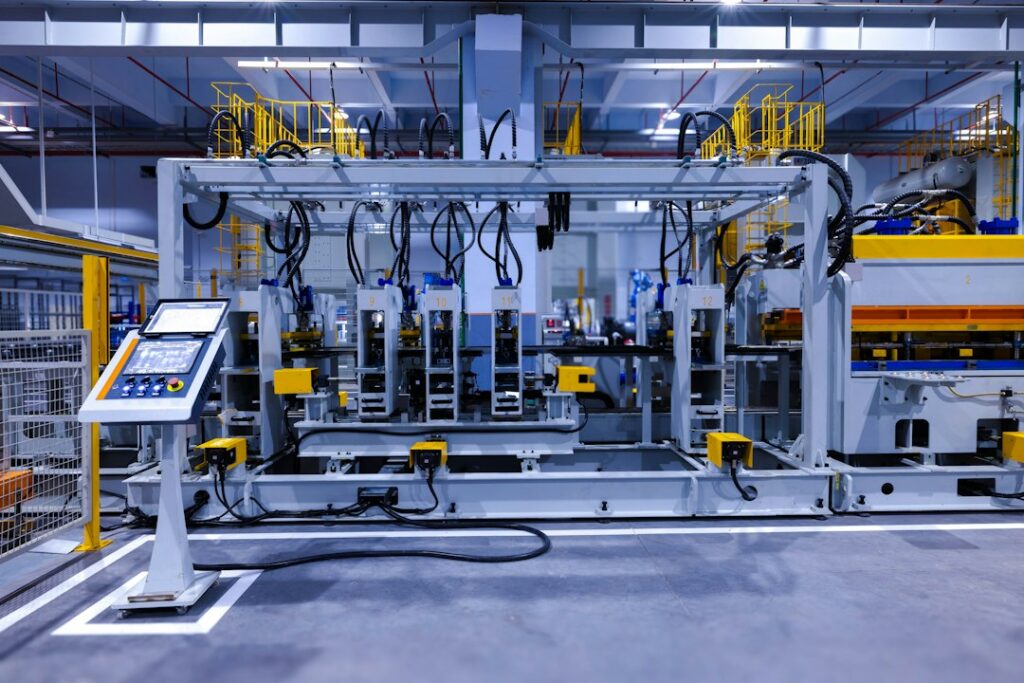
The LMBF…L/LMBK…L Series is a family of flange-mounted, long-type pressing bush bearings designed for linear motion applications where rigidity, easy installation, and reliable shaft guidance are required. Built to the dimensional conventions of the LM series linear bushing family, these bearings combine a self-aligning ball-retainer design with an integrated mounting flange, allowing engineers to simplify machine construction and reduce the number of separate support components in a linear axis.
For design engineers and procurement managers evaluating linear motion bearings for automation equipment, machine tools, packaging machinery, or precision handling systems, the pressing bush bearing category offers a practical balance of load capacity, compactness, and cost-efficient assembly. The long-type “L” designation indicates an extended bushing body, which distributes contact loads over a greater number of recirculating ball rows and delivers higher moment rigidity than standard-length equivalents.
This guide explains what defines the LMBF…L/LMBK…L Series, how the round-flange and square-flange variants differ, how to approach linear bushing selection with confidence, and what a disciplined bearing maintenance guide looks like in production environments. It is written for engineers who need technically grounded information rather than marketing generalities.
LMBF…L/LMBK…L Series at a Glance
- Product type: Flange-mounted, long-type pressing bush bearing within the LM series linear bushing dimensional family, designed for smooth recirculating-ball linear motion on hardened and ground shafts.
- Mounting options: LMBF…L provides a circular flange suited to compact housings and cylindrical mounting patterns; LMBK…L provides a square flange suited to flat-surface mounting and higher anti-rotation stability.
- Long-type advantage: The extended “L” body increases load distribution and moment rigidity, making it preferable for longer strokes, cantilevered loads, or applications subject to rocking forces.
- Typical construction: Bearing steel raceways (such as GCr15 / SUJ2 equivalents), precision-ground and hardened for wear resistance, with a ball retainer designed for low-friction, low-noise recirculation.
- Quality system: Manufactured by FIJ Industrial Technology Limited under an ISO 9001 certified quality management system, supporting consistent dimensional control across production batches.
What Makes the LMBF…L/LMBK…L Series Different from Standard Linear Bushings?
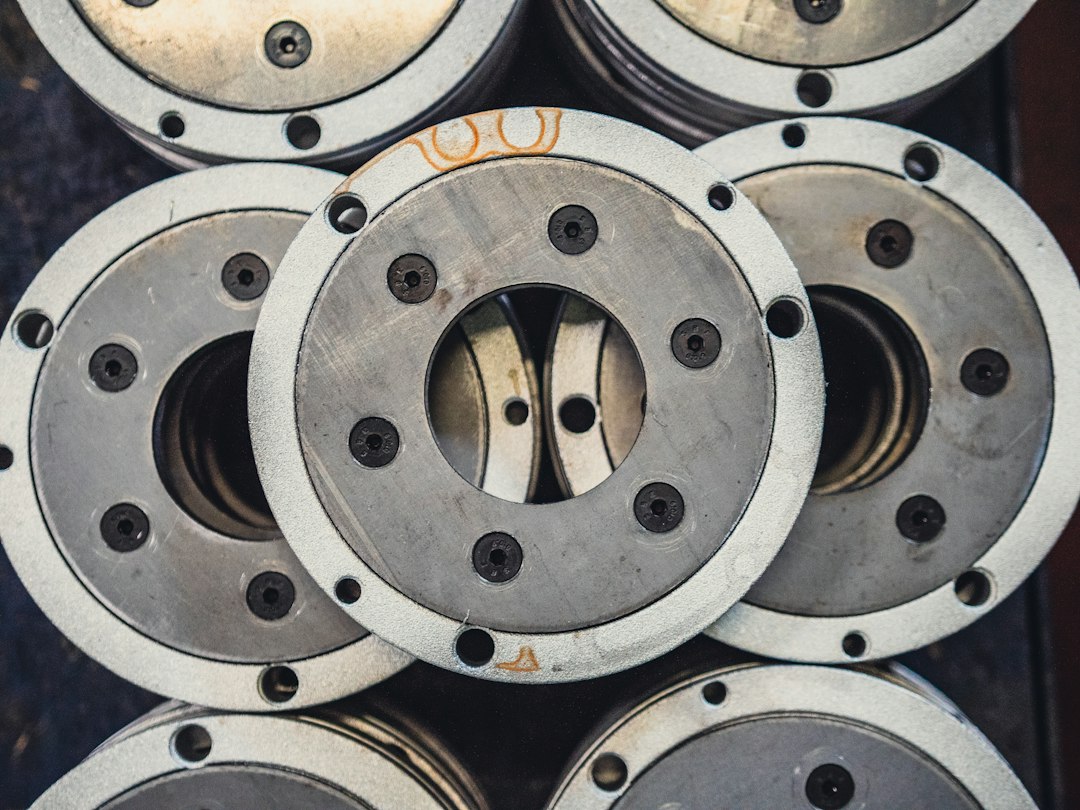
A standard LM series linear bushing is a cylindrical pressing bush bearing that must be retained inside a precisely bored housing. While effective, this approach adds machining cost and assembly time: the housing bore must be held to a tight tolerance, and axial retention features such as circlips or end caps are typically required. Flange-mounted variants solve this by integrating a mounting flange directly into the outer sleeve. The bearing bolts straight onto a flat face, eliminating the precision housing bore entirely.
The “L” long-type designation is equally significant. In a recirculating-ball linear bushing, load is carried by rows of steel balls running between the shaft and precision-ground raceways in the outer sleeve. A longer body accommodates more ball contact points along the axis of travel, which yields three practical benefits: higher basic load ratings, improved resistance to moment loads caused by overhung weights, and more stable motion with reduced tendency to rock or chatter at the ends of stroke. For engineers working with longer carriages, vertical axes, or offset tooling, the long-type configuration is often the more conservative and reliable choice.
The two flange styles address different mechanical constraints. The LMBF…L round flange is favored where space is tight around the mounting point, where the bearing sits in a circular bore pattern, or where the design derives from equipment originally engineered around round-flanged bushings. The LMBK…L square flange provides a larger flat mounting surface and four symmetric bolt positions, which resists rotation of the bearing under reversing loads and is commonly used on fabricated machine plates and aluminum extrusion frames. Both styles belong to the same LMBF…L/LMBK…L Series product line and share the same internal raceway geometry, so the choice between them is primarily a mounting-design decision rather than a performance trade-off.
From a standards perspective, bearings of this type are produced in line with the dimensional conventions established for LM series linear bushings and manufactured under widely recognized ISO/GB quality frameworks for linear motion components. Engineers accustomed to standard LM bushing shaft diameters and tolerance practices will find the transition to flange-mounted versions straightforward, since the same hardened, ground, and polished shafts are used throughout the product family. You can explore the full range within our Pressing Bush Bearing family.
How Should Engineers Approach Linear Bushing Selection?
Effective linear bushing selection begins with the load case, not the catalog page. Start by mapping the forces acting on the bearing over the full stroke: the payload weight, any acceleration-induced inertial forces, and the moment loads generated when the load center sits away from the bearing centerline. Because the LMBF…L/LMBK…L Series is a long-type design, it is particularly well matched to applications where a single bearing pair must resist pitching or yawing moments — scenarios where a standard-length bushing would experience uneven ball loading and accelerated raceway wear.
The comparison below summarizes how engineers commonly weigh the variants and related options against each other:
| Option | Mounting Character | Rigidity Profile | Best Suited For |
|---|---|---|---|
| LMBF…L (round flange, long) | Compact circular flange; fits tight envelopes | High, extended ball contact zone | Cylindrical housings, compact axes, retrofit of round-flange designs |
| LMBK…L (square flange, long) | Flat four-bolt pattern; strong anti-rotation | High, extended ball contact zone | Fabricated plates, extrusion frames, reversing loads |
| Standard-length flange types | Same mounting convenience, shorter body | Moderate, fewer ball rows | Short strokes, space-limited, lighter duty cycles |
| Piloted-flange variants (e.g., LMFP/LMKP Series) | Flange with locating pilot for precise centering | High, with superior positional repeatability | Multi-bearing axes demanding tight alignment |
Beyond geometry, consider the operating environment. Contamination from dust, chips, or washdown fluids shortens the service life of any recirculating-ball linear bushing, so select seals or protective bellows where needed. Lubrication strategy matters as well: grease lubrication suits most industrial duty cycles and simplifies maintenance, while oil lubrication may be preferred for high-speed or high-duty-cycle axes. Shaft quality is another frequent failure point — pairing a precision bushing with an underspecified shaft in terms of hardness, surface finish, or diameter tolerance undermines the entire system. As a practical reference point, linear bushings of this class are normally run on shafts hardened to roughly HRC 58–64 with a finely ground finish, consistent with common LM series practice.
For engineers comparing alternatives within the same family, two related series are worth reviewing. The LMF/LMK Series offers the same round- and square-flange mounting convenience in standard-length bodies, which can be the more economical choice when moment loads are modest. Where the “L” long-type rigidity profile is desired but with European-style dimensioning preferences, the LMEF…L/LMEK…L Series provides a comparable engineering solution. For low-profile or lightweight axes, the KH Series offers a compact-stamped construction alternative worth evaluating.
Procurement teams should also stan
dardize deliberately. Specifying one flange style and a consistent shaft diameter range across a machine platform reduces spare-part variety, simplifies assembly documentation, and improves negotiating leverage on volume orders — without compromising engineering fitness.
What Does Proper Installation and Maintenance Look Like?
Even a well-specified industrial linear bearing will underperform if installed or maintained carelessly. The following bearing maintenance guide covers the practices that most directly influence service life in production environments:
- Handle with cleanliness: Keep bearings in their packaging until the moment of assembly, and wipe shafts clean before the first stroke. A single particle of hardened contaminant trapped in the ball raceway can initiate brinelling and permanent noise.
- Seat the flange evenly: Tighten flange bolts in a diagonal, staged pattern so the bearing face sits flat against the mounting surface without distortion. An unevenly seated flange introduces misalignment that the self-aligning ball retainer cannot fully absorb.
- Align the axis before final torque: Where two or more bearings run on a common shaft, verify shaft straightness and bearing parallelism before locking fasteners. Misaligned pairs cause uneven ball loading and shorten life dramatically.
- Lubricate on a defined schedule: Re-grease at intervals matched to duty cycle, speed, and environment rather than waiting for noise to appear. Use a lithium-based grease compatible with bearing steel raceways, and purge old grease rather than simply topping up.
- Monitor wear indicators: Increased play, vibration, audible clicking over ball tracks, or visible raceway scoring all signal that inspection or replacement is due. Track these observations in a maintenance log to build replacement intervals based on your own application data.
Storage deserves equal attention. Bearings held as spares should be stored horizontally in a dry, vibration-free environment, away from corrosive atmospheres. Light rust preventative oil on exposed surfaces prevents corrosion of precision raceways during long storage periods.
Frequently Asked Questions
Q: How do I decide between the LMBF…L and LMBK…L variants in my design?
A: Both share the same long-type internal construction and load capacity profile, so the decision rests on the mounting interface. Choose LMBF…L where a compact circular flange suits the surrounding geometry or matches an existing design convention; choose LMBK…L where a flat four-bolt square flange on a machined plate or extrusion surface provides better anti-rotation behavior and easier fabrication.
Q: Are LMBF…L/LMBK…L Series bearings compatible with standard LM series linear bushing shafts and housings?
A: Yes. Bearings in this series follow the dimensional conventions of the LM series linear bushing family, meaning they run on the same hardened, ground shafts of corresponding nominal diameter. Because the flange replaces the precision housing bore, no bored housing is required — only a flat mounting surface with correctly positioned bolt holes.
Q: What maintenance does a pressing bush bearing require in continuous industrial service?
A: The essentials are contamination control and scheduled lubrication. Keep the shaft clean and protected from chips and dust, re-grease at intervals matched to the duty cycle, tighten flange bolts periodically as part of preventive maintenance, and inspect for play, noise, or raceway scoring. Addressing wear indicators early prevents secondary damage to the shaft, which is typically the more expensive component.
Q: What quality standards and materials back this series?
A: The bearings are manufactured from bearing-grade steel raceways, precision ground and hardened in line with common ISO/GB practices for LM series linear bushings, and produced under an ISO 9001 certified quality management system at FIJ Industrial Technology Limited in Tianjin, China. The company exports linear motion components to Europe, North America, and Southeast Asia, supporting customers who need consistent, documented quality across production batches.
Linear motion components rarely fail because of a single dramatic event — more often, they degrade quietly under misalignment, contamination, or a specification that never quite matched the real load case. If your current axis design relies on standard-length bushings in a moment-loaded or long-stroke application, when did you last review whether the mounting style, bushing length, and lubrication regime truly reflect your application’s demands?
Recent News
- LMBF…L/LMBK…L Series Pressing Bush Bearings: Engineering Selection and Maintenance Guide
- LM…LUU-MX Series: Linear Bearings for Maintenance-Free Automation
- LMSH…L Series: Compact Linear Bearing Guidance for Short-Stroke and Medium-Duty Motion
- LMEF(K)M…LGA Steel Cage Series: Engineering Guide for High-Load Linear Motion Applications
- Elliptical Flange Type: A Design Engineer’s Guide to This Guide Shaft Support Solution
- LMH…LUU-MX Series: Self-Lubricating Oval-Flanged Linear Bearings for Continuous-Duty Industrial Motion
- Super Linear Bearing Engineering Guide: Selection, Load Capacity and Maintenance
- Guide Shaft Support: Selection, Mounting, and Maintenance for Precision Linear Motion Systems